


First Steps In Winemaking
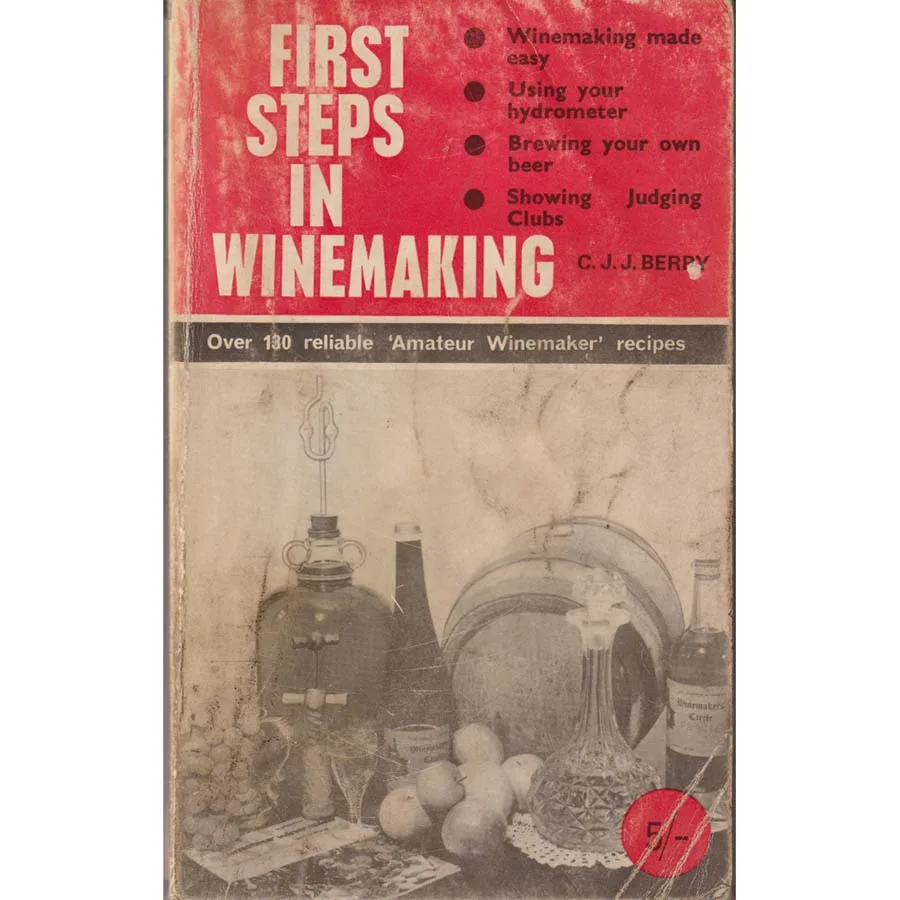
Publisher: Amatuer Winemaker
Format: Paperback
ISBN: none
Behold: First Steps in Winemaking (c.1965) by C. J. J. Berry, published by Amateur Winemaker — ISBN: none (because the book was made in a time when hobbies didn’t need barcodes), offered in Fair condition by Crappy Old Books, and carrying that wonderfully specific warning label of vintage practicality: the binding is good but delicate, and the pages may start to fall out if you treat it like a brand new book.
Which is, frankly, the most authentic winemaking experience possible.
Because this isn’t a glossy modern “Weekend Rosé in Ten Easy Minutes” manual. This is old-school British home-brew culture — a time when the nation looked at hedgerows, allotments, surplus fruit, and mild economic adversity and thought: we can turn that into alcohol. It’s thrifty, ingenious, faintly chaotic, and utterly sincere. Berry writes for people who want to make wine in kitchens, sheds, and spare rooms, armed with demijohns, rubber bungs, a siphon tube, and the unshakeable belief that fermentation is basically nature doing you a favour.
First Steps in Winemaking is exactly what it says: the entry ramp. It’s the friendly handshake before the slippery slope into “just one more batch” and “I’ve started naming my yeasts.” Expect practical guidance, plain language, and the comforting sense that if you follow the instructions (mostly), you will end up with something drinkable (eventually). It’s the kind of book that assumes you are capable, resourceful, and willing to learn through minor disaster.
And because it’s the Third Edition (with no date — very on-brand for the era), it has that lived-in, community-tested feel. Not a pristine academic text, but a working handbook: updated because people actually used it, and presumably wrote in with questions like “why does mine smell like an old sock” and “is it meant to fizz like that.”
Now, the best bit: the adverts in the back.
If you love ephemera, this is half the joy. Ads for yeast, bottles, corkers, demijohns, hydrometers, mysterious powders, and mail-order suppliers who will post you everything required to transform your spare cupboard into a small, optimistic winery. The language will be marvellous: confident, earnest, and entirely unembarrassed about selling you specialist equipment for turning parsnips into something that could technically be served at Christmas.
As for condition: this copy is Fair, and it’s important to read that as “vintage and slightly temperamental,” not “useless.” The binding is good but delicate, and the pages may loosen if you get too enthusiastic — so treat it like a real 1960s hobby manual: gentle hands, no spine-breaking, no aggressive flattening on the kitchen table while stirring a bubbling bucket of elderberry ambition.
Think of it as a book that wants you to approach winemaking the way you should approach fermentation: patiently, respectfully, and with an acceptance that things may become unstructured.
Ideal for:
-
Home-brewers and winemakers who like the classic, practical approach
-
Collectors of C. J. J. Berry and British brewing ephemera
-
Anyone who enjoys vintage how-to books with ads, charm, and a faint air of danger
-
People who look at a hedge and think “I could drink that”
So if you want a genuinely old-school guide to the noble art of making wine at home — plus a back section that doubles as a little museum of mid-century hobby commerce — this is a lovely, fragile survivor. Not modern. Not precious. Not guaranteed to behave.
Fair condition. Third edition. Plenty of ads. Handle with care — and possibly a tea towel.
Crappy Old Books supplies the first steps. Nature does the rest.
Keep browsing: See more Food books Other books by CJJ Berry
